Remembrance and Action
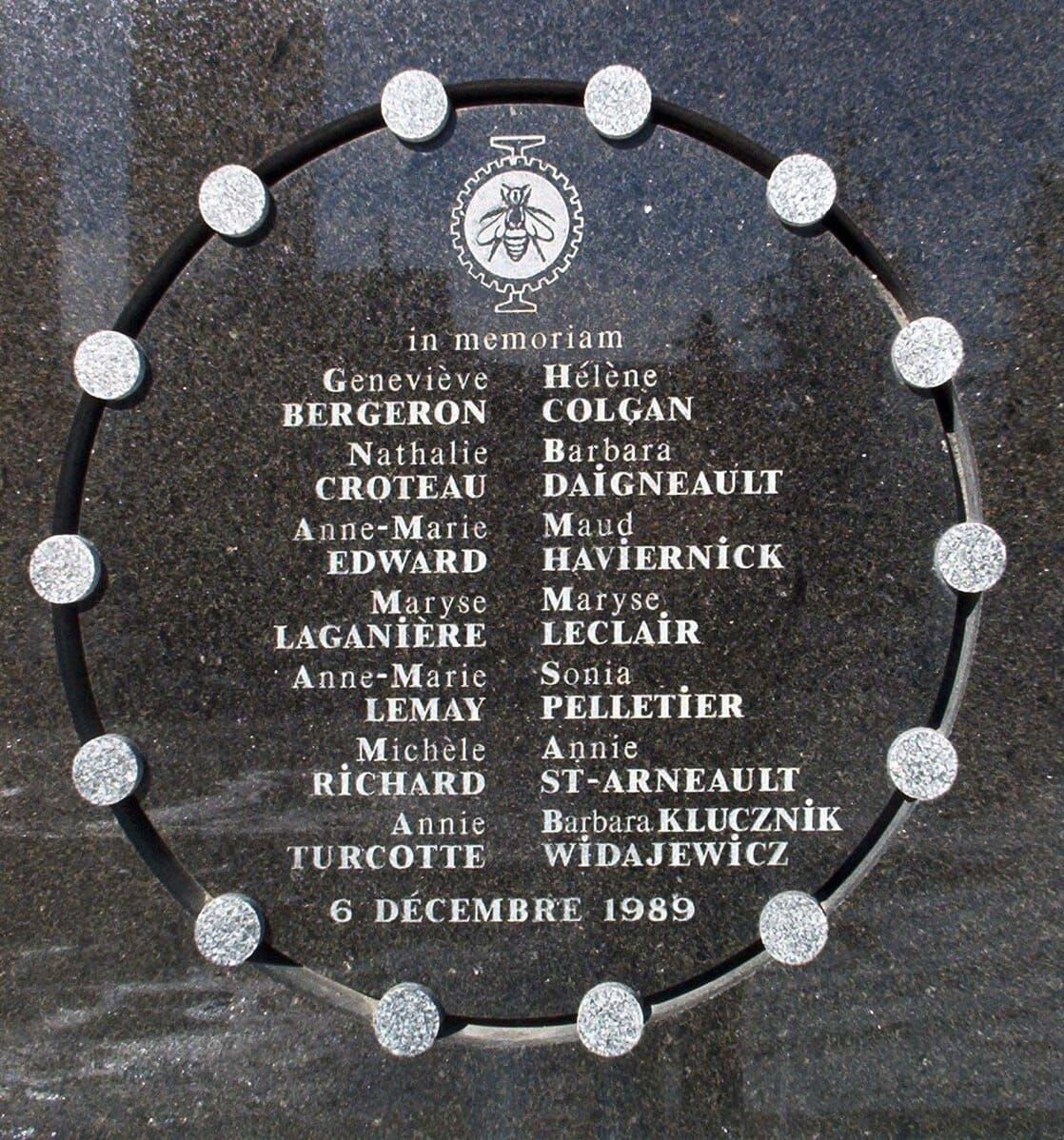
December 6 is a difficult day for women of my generation.
I was 21 in 1989, working on my MA in Dublin, and was getting my hair cut in a Grafton Street salon when I heard the news about 14 women murdered at École Polytechnique in Montréal. Murdered not only because they were women, but women daring to enter into spaces deemed reserved for men. Women getting educated. Women planning careers in engineering.
I don't know one woman in my age group who was not deeply impacted by the massacre. Although the information that the killer had a list of prominent women leaders he was targeting was not initially made public, we knew in our heart and soul that this was an attack intended to send a message. It was a message I'd already heard loud and clear, through the media's portrayal of women and feminists, through the pervasive culture of tolerance to harassment and sexual assault I had witnessed and experienced as a teen and in my undergrad years. Those 14 women were all of us. And we knew it.
Thanks to the feminist movement in Canada, who refused to accept the framing of this incident as the work of one disturbed individual, we mark this day as a National Day of Remembrance and Action on Violence Against Women. And unfortunately, 36 years later, we find ourselves still grappling with rates of gender-based violence now widely acknowledged as an epidemic.
Since 1989 we have experienced more mass killings with a clear link to misogyny and domestic violence. So far in 2025 we have lost 135 women and girls to femicide. We've had studies and inquiries and inquests and reports and recommendations and campaigns. We've had statements and tears and handwringing from decision-makers, as if this is a phenomenon so mysterious and unthinkable that they can dismiss any role they play in perpetuating stereotypes and systems that allow GBV to continue and misogyny to flourish.
The latest trend from decision-makers is to look to criminal justice solutions to signal their commitment to ending gender-based violence. During the last election, Conservatives and Liberals tried to outdo each other with their tough-on-crime approach. This isn't just out of touch, it's a willful disregard for evidence-based approaches and a complete misrepresentation of GBV as a phenomenon connected to attitudes, systems and structures - a problem that demands thoughtful attention and tough action guided by the experience of those who have survived violence and harassment and that bring about systemic changes to prevent violence, respond effectively and put the support and safety of those targeted at the centre.
Can the bros stop bro-ing and shift their approach? In this political climate? Not unless they put their dick-measuring sticks away, set aside the rhetoric and politics of aggressive masculinity and listen to the advice that feminists, experts, survivors and others have been trying to give for the last three and a half decades. The solutions are there, in the inquiries and reports and recommendations. What we lack is the political will to follow through.
And yep, that might mean making hard choices. It might mean adding some transparency and accountability to the government action playbook, instead of the quick and easy media hit that, say, criminalizing coercive control or electronic monitoring might bring. It might mean investing in social infrastructure as well as physical infrastructure, seeing an end to gender-based violence as a Project of National Interest. It might mean getting out of the political bro comfort zone, moving past performative action (whether performative feminism or tough-on-crime posturing) and following through with meaningful, lasting change.